
The same argument runs through r/olaelectric, r/ATHERENERGY and every scooter Facebook group: “I never leave it plugged in at night” versus “my charger cuts off anyway.” One Bengaluru owner even wrote that he sets a 3 AM alarm to unplug. After reading the BMS documentation and the incident reports, the alarm is the only part of that routine that is unnecessary.
The 3-Second Answer
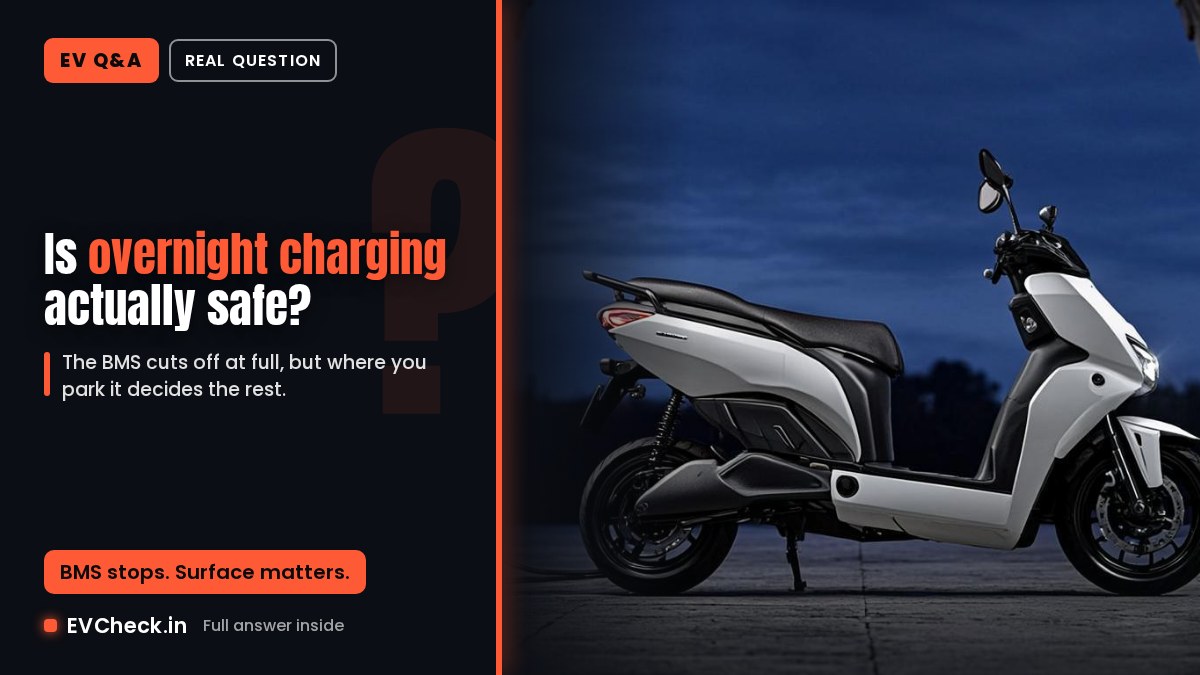
Yes, overnight charging with the brand’s certified charger is safe, because the BMS stops charging current once the pack hits 100%. What decides safety is not the hours, it is the surface, the ventilation and the wiring the charger is plugged into. A melted 6A board under a staircase, not the BMS, is how bad nights happen.
What the BMS Actually Does at 100%
When cells reach full charge, the battery management system opens the charge path and the current drops to nearly zero. The charger’s indicator stays green, but it is idle. Lithium packs do not soak up extra current the way old NiCd batteries did. That alarm-setting owner is unplugging a line that has already been switched off internally.
Incident reports that do exist share a pattern, and it is never “hours at the plug.” It is a damaged cell group, a non-certified replacement charger, a pack already swollen, or charging blocked under a seat cover where heat cannot escape. Hours on a healthy system are not the trigger. Heat plus a fault is.
The Rules That Actually Matter
- Surface: charge on concrete or tile with air around the brick. Carpet, bedding, inside a closed shoe rack or under a scooter cover traps the heat the charger is trying to shed.
- Space: a balcony, porch or garage corner beats a bedroom. If the only option is inside, keep a metre clear around the scooter and charger.
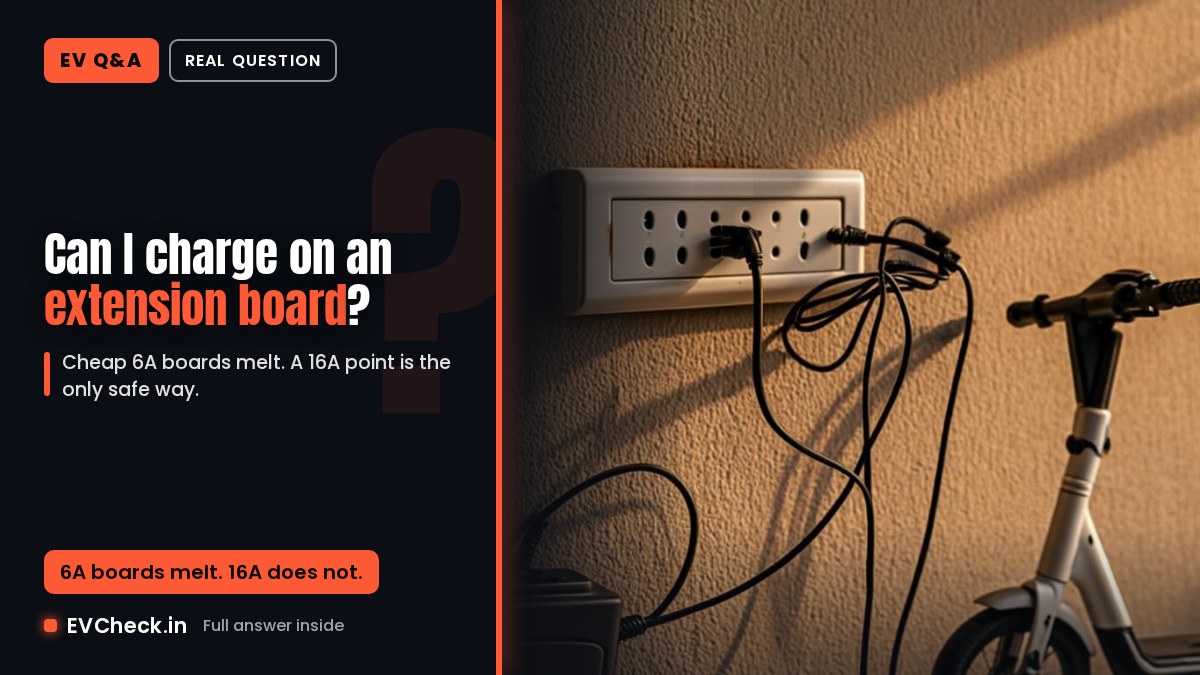
- Hardware: certified charger, dedicated 16A point, no multi-plug sharing. The previous article in this series covers the board that melted exactly because this rule was skipped.
- Pack health: a swollen pack is a stop-using-it pack, whatever the hour. We cover the swelling warning signs later in this chain.
The One Overnight Habit Worth Changing
If the scooter will sit unused for weeks, 100% is the wrong parking level. Heat plus high charge state is what ages cells in the background, so 40 to 60% is the better level for long gaps. Nightly charging for daily riding is completely different and completely fine. For the deeper physics of parked batteries, our calendar ageing explainer shows how a garage at 45°C quietly spends battery life even when the scooter is not moving.
Now that the overnight question is settled, here is the one that keeps showing up next in every thread: owners see the percentage fall while the scooter just sits parked. Where does that charge go? We traced the full answer in why EVs drain while parked, including the number that separates normal from faulty.
Do you unplug at night or trust the BMS? Tell us your habit in the comments, along with your city, because summer heat changes the math.